
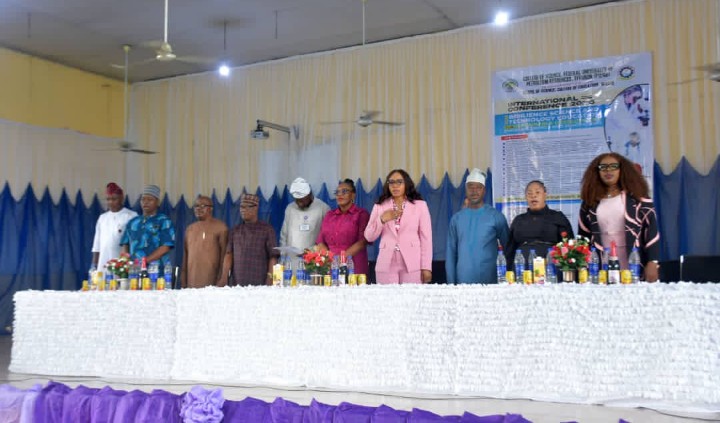
The College of Education (COE), Warri, in collaboration with the Federal University of Petroleum Resources, Effurun (FUPRE), held the official opening ceremony of the 1st School of Science International Conference on Tuesday, October 6, 2026.
The four-day international gathering, which ran from October 5 to 8, 2026, was centered on the theme: “Resilient Science and Technology Education for Sustainable Development: Building Resilient Minds and Innovation.”
Organized by the School of Science, COE Warri, the event brought together distinguished scholars, educators, researchers, and key industry stakeholders to exchange ideas and explore innovative paradigms in science and technology education aimed at driving sustainable development,
Fostering Innovation and Collaborative Research.
Welcoming delegates to the conference, the Dean of the School of Science, Comrade B. O. Sanubi, described the gathering as a vital platform for intellectual discourse, knowledge transfer, and inter-institutional collaboration. He expressed confidence that the cross pollination of ideas during the conference would spark fresh insights and forge stronger partnerships across the academic community.
In her opening remarks, the Provost of COE Warri, Dr. (Mrs.) Fidelia Ighrakpata, underscored the urgency of equipnavigate global challenges, including climate change, the energy transition, and rapid digital disruption. She urged participants to look beyond academic paper presentations and use the conference as a catalyst to establish enduring research collaborations.
Delivering the keynote address on behalf of the Vice-Chancellor of FUPRE, Prof. Ezekiel Oghenenyerovwo Agbalagba, the Deputy Vice-Chancellor (Administration), Prof. (Engr.) Chiedu Owabor, identified resilience, innovation, and sustainability as critical pillars of modern higher education. She advocated for enhanced research commercialization, entrepreneurship training, intellectual property management, and strategic industry partnerships. She emphasized that modern graduates must be trained not only as job seekers but as innovative creators of opportunity.
Lead paper presentations delivered by Prof. Rafiu A. A. and Prof. J. N. Odili further enriched the discussions. Their papers focused on:
Re-engineering science and technology curricula to integrate practical and AI-driven skills, Addressing climate change and environmental ethics within teacher education.
Technical Sessions and Actionable Outcomes
Subsequent days featured robust technical sessions, during which researchers presented papers across diverse scientific disciplines. Interactive question and answer segments provided delegates the opportunity to critically engage speakers, interrogate presented frameworks, and debate practical implementations.
The conference concluded with a collective charge to all academic and industry stakeholders to translate the ideas, findings, and recommendations generated during the event into actionable policies and practical solutions that will foster resilient minds, inspire innovation, and advance sustainable development.